
Have you ever tried using your UV Resin as a glue?
I do, and it works brilliantly for many of my craft projects. One of the things I particularly like about it is that, when used carefully, it’s virtually invisible.
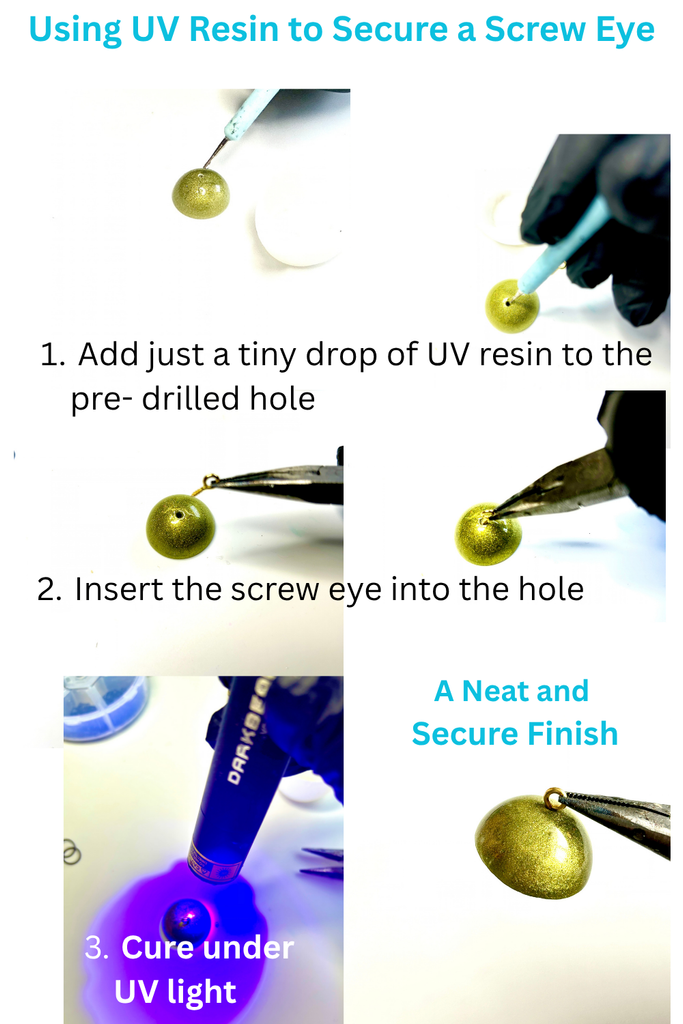
I first started to use UV resin as an adhesive when making jewellery and keyrings. Sometimes I need to insert a small screw eye or hook into a resin piece so that I can attach it to another component. I wanted to make sure that little screw fitting was secure.
At first I used super glue. It held well, but I sometimes found that the dried glue was visible around the fitting, which could make the finished piece look a little messy.
That’s when I started using a little drop of UV resin instead. I position the fitting, add a little resin and cure it with my UV torch. There’s no waiting around for glue to dry, and if I use just the right amount, the resin is barely noticeable.
Below are a few examples of where I use UV resin as a glue in my craft projects.
This post contains affiliate links. As an Amazon Associate I earn from qualifying purchases
Why I like using UV resin as a glue
I find it useful because I already craft with resin every day, so it is always readily available to me to use, I feel comfortable handling UV resin and I have access to a UV lamp and UV torch to cure the resin.
I must also mention here safety concerns when using resin and suggest you see my post on crafting safely with resin
When UV resin works well as an adhesive
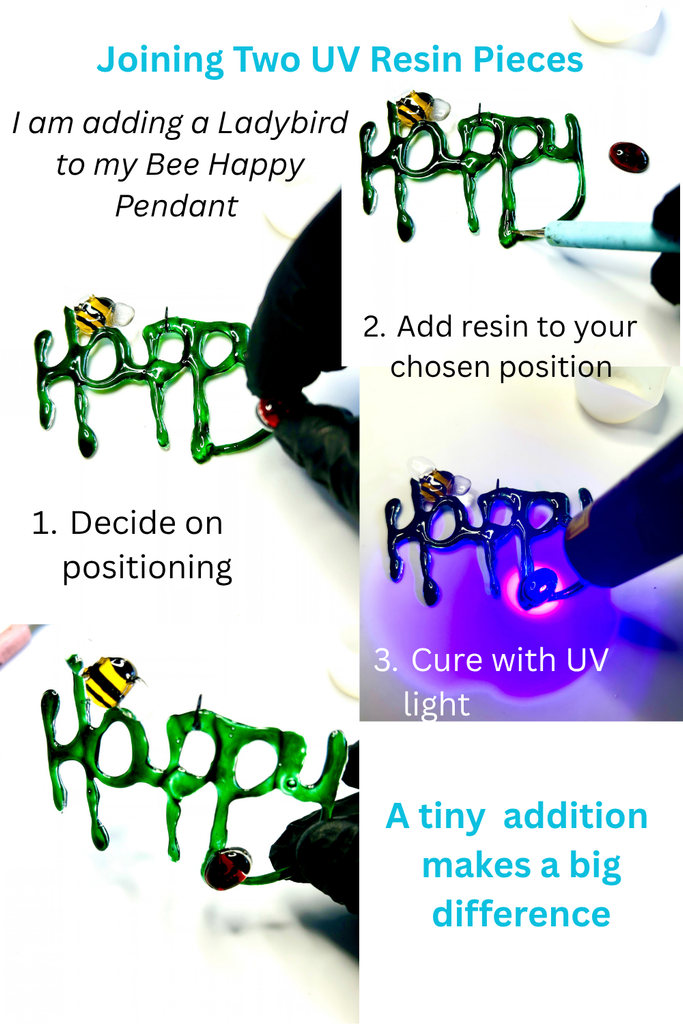
Resin on resin is best – I know that when I add an embellishment onto something like a resin keyring, earring or bag charm, it’s going to ‘stay firmly in place’.
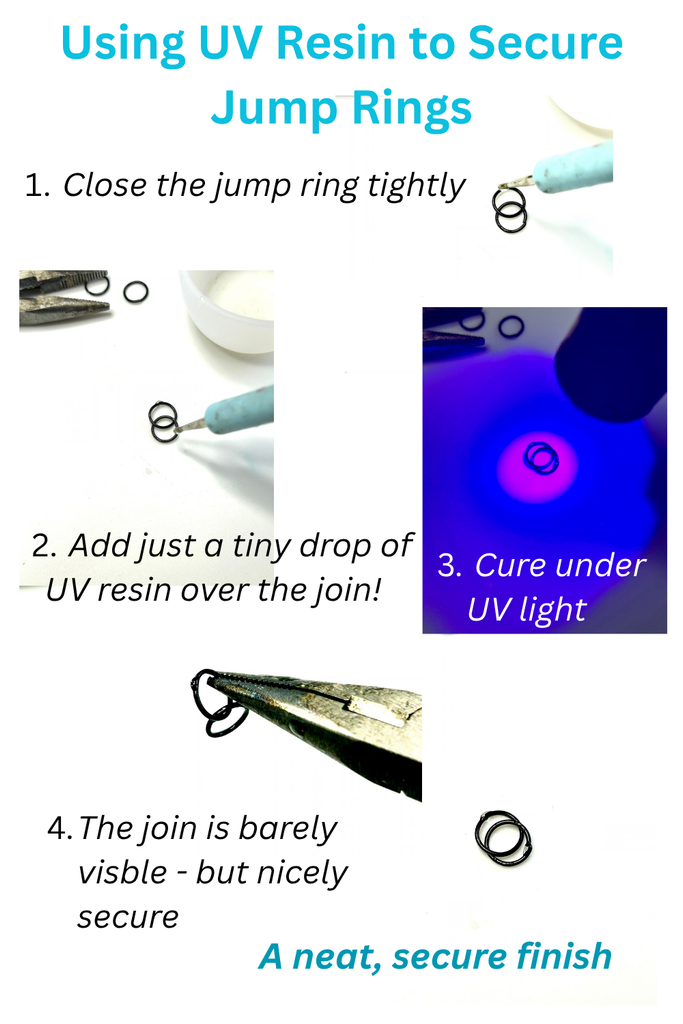
I also as I mentioned earlier like to seal jump rings especially on keyrings and earrings – nobody wants to lose a key or a much loved earring because a jump ring was not secure – adding a tiny drop of uv resin and curing – I suggest curing with a UV torch – as its much easier with fiddly bits like this rather than a large UV lamp. You can see the UV torch that I use right here
A few things to watch out for
Because you’re often working on small, fiddly areas when using UV resin as an adhesive, it’s very easy to use a little too much. I find it best to work with tiny amounts and keep my work area protected so that any uncured resin can be cleaned up safely.
You also need to take care if you are holding a piece that you are joining with the use of tweezers or pliers that you do not have resin on these tools whilst curing – or you may find you have an earring attached firmly to a pair of pliers – not the best look and yes it has happened to me 🤣
UV resin isn’t suitable for everything
UV resin needs UV light to reach it to cure properly, so it’s not a universal replacement for glue – if you’re sandwiching it somewhere the UV light can’t penetrate, it may not cure properly.
Surfaces UV resin may struggle to bond with
UV resin won’t stick equally well to every surface. Smooth, flexible, oily or non-stick materials can be particularly difficult, including silicone, polyethylene, polypropylene and PTFE (often known as Teflon). Waxed or oily surfaces can also prevent a good bond.
If I’m unsure about a material, I prefer to test a tiny amount first rather than risk spoiling a finished piece.
So Will You Use UV Resin as a Glue ?
I know my choice, but I would suggest that you experiment and discover for yourself, which method works best for you and your type of craft.
I have put together some of the tools and materials I personally use for my crafts in my Amazon Shop Front which you may find useful – you can see my shop front here
If you found found this post helpful – you may also find some of my previous posts of use to you, and your find them right here